
Levator Scapulae – The Hidden Muscle Behind Neck and Shoulder Tension

Many people experience neck stiffness, tight shoulders, or discomfort around the upper shoulder blade, especially after long hours of desk work.
One muscle that is commonly involved is the Levator Scapulae.
This muscle connects the upper neck to the shoulder blade and plays an important role in supporting neck movement and shoulder positioning.
Understanding how the Levator Scapulae works may help explain why neck and shoulder tension develops and what can be done to improve it.
1. Where Is the Levator Scapulae?

The Levator Scapulae is a deep muscle located at the side and back of the neck.
It originates from the upper cervical vertebrae (C1–C4) and attaches to the upper inner border of the shoulder blade.
Because of its location, tension in this muscle is often felt along the side of the neck or at the top of the shoulder.
The Levator Scapulae works together with several other muscles to help support healthy neck and shoulder movement.
2. What Does It Do?
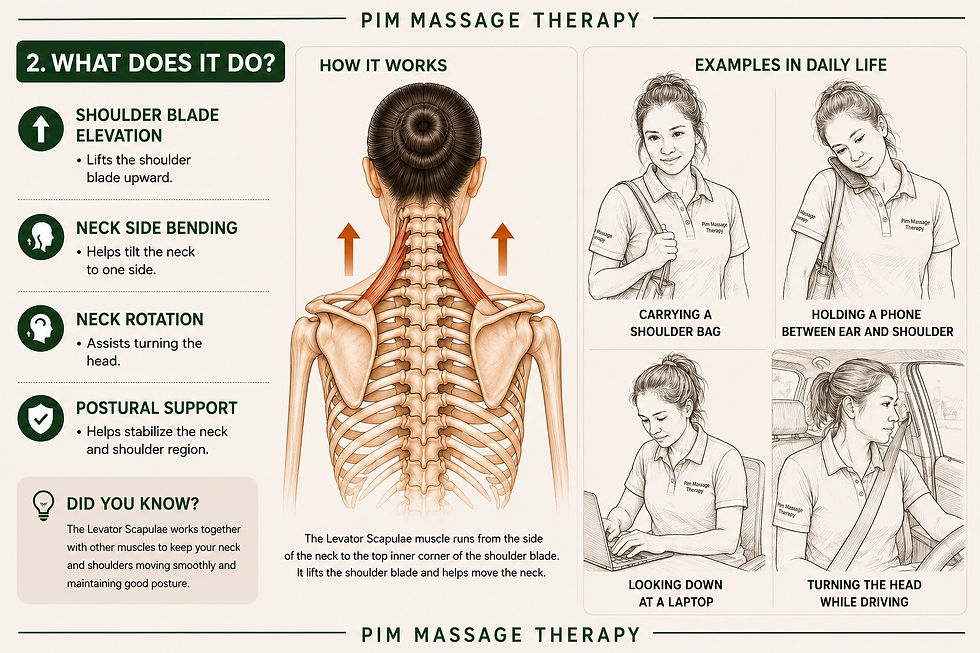
The Levator Scapulae has several important functions:
Elevates the shoulder blade
Assists side bending of the neck
Helps rotate the neck
Supports shoulder and neck stability
Contributes to postural control
This muscle is active during many everyday activities, including carrying bags, looking down at a phone, working at a computer, and turning the head while driving.
When functioning normally, it helps the neck and shoulders move comfortably and efficiently.
3. Common Signs of Dysfunction

When the Levator Scapulae becomes tight, irritated, or overworked, you may experience:
Neck stiffness
Difficulty turning the head
Pain at the top of the shoulder
Tension headaches
Elevated or uneven shoulders
Discomfort around the shoulder blade
These symptoms are commonly associated with prolonged sitting, stress, poor posture, and repetitive neck movements.
Many people notice symptoms becoming worse after long periods of computer work or looking down at mobile devices.
4. Self-Care and Exercises

Simple exercises and daily habits may help reduce tension in the Levator Scapulae.
Helpful strategies include:
Levator Scapulae Stretch
Gently turn your head approximately 45 degrees and look downward toward your armpit while applying a light stretch.
Shoulder Rolls
Roll the shoulders up, back, and down to help reduce muscle tension.
Chin Tucks
Gently draw the chin backward while keeping the head level to encourage better posture.
Movement Breaks
Avoid staying in one position for extended periods.
Regular movement throughout the day may help reduce muscle fatigue and stiffness.
Daily Habits That May Help
Small changes can make a big difference:
Adjust your workstation
Take regular movement breaks
Avoid carrying heavy bags on one shoulder
Limit prolonged forward head posture
Maintain good sitting posture
Final Thoughts
The Levator Scapulae is a small muscle with a big influence on neck and shoulder comfort.
When it becomes tight or overworked, it may contribute to neck stiffness, shoulder tension, and headaches. Improving posture, taking movement breaks, and performing gentle stretching exercises may help keep this muscle functioning well.
If symptoms persist or continue to affect your daily activities, professional assessment and treatment may be beneficial.


Comments